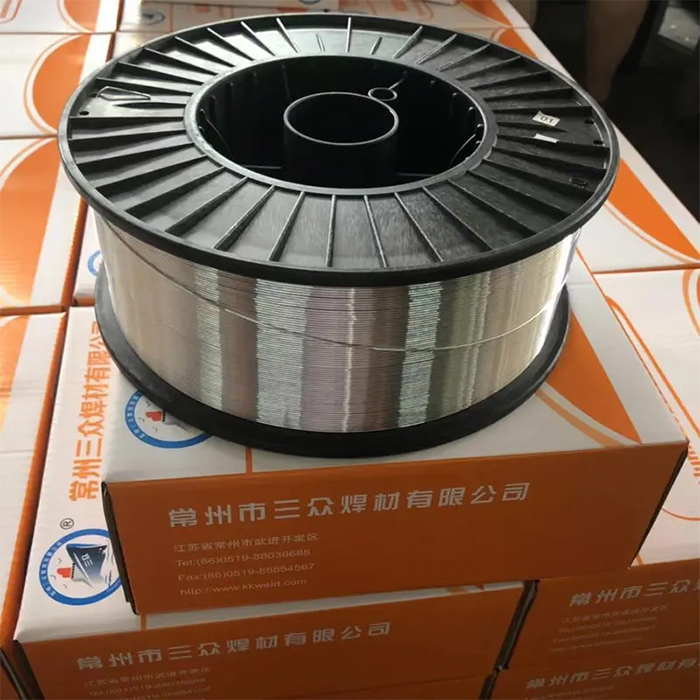
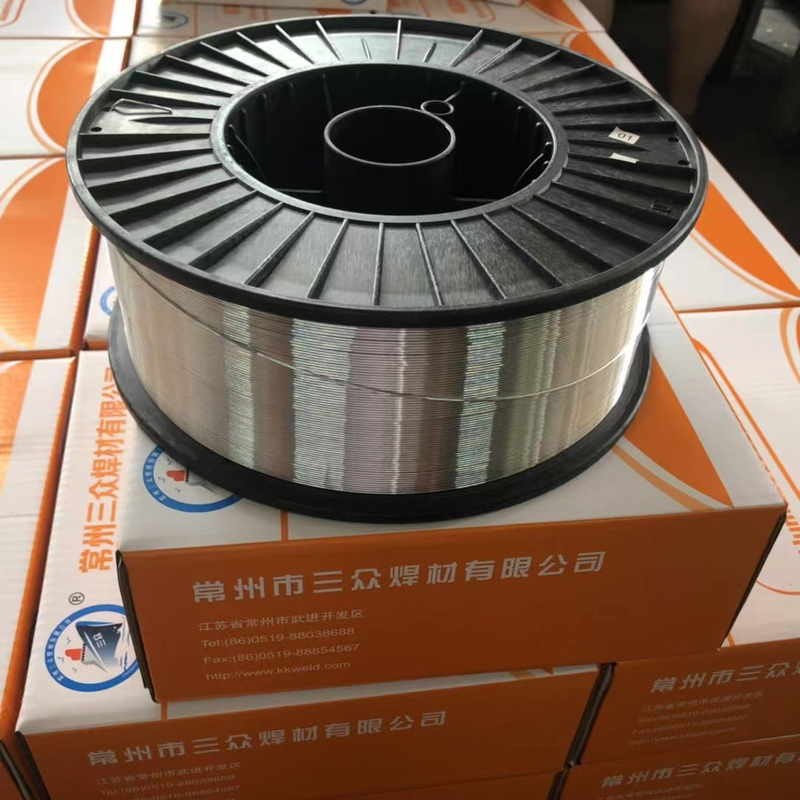
If you weld aluminum for a living, or you are about to order your first batch of aluminum MIG wire, the choice between ER5356 vs ER5183 can feel surprisingly difficult. Both are aluminum-magnesium filler metals, both are listed under the AWS A5.10 classification system, and both are recommended for 5xxx and 6xxx series base alloys. Yet welders who pick the wrong one usually discover the difference the hard way: a weld that cracks under dynamic load, a marine structure that fails a corrosion inspection, or an anodized part that comes back with an uneven, mismatched color.
This guide compares ER5356 vs ER5183 aluminum welding wire from the chemistry up — composition, mechanical properties, corrosion resistance, post-weld anodizing behavior and real-world applications — so you can get your ER5356 vs ER5183 aluminum welding wire selection right the first time, and understand exactly what you are paying for.
Key Takeaways
Same family, different job: ER5356 vs ER5183 are both aluminum-magnesium (5xxx) filler metals classified under AWS A5.10, yet they are engineered for different levels of duty.
Composition is the root difference: ER5183 carries roughly ten times more manganese (0.50–1.00%) than ER5356 (0.05–0.20%), which directly boosts weld strength and stress corrosion cracking resistance.
ER5183 is the structural choice: it generally delivers higher as-welded strength and better toughness and fatigue performance, making it the default for shipbuilding, cryogenic tanks, rail cars and pressure vessels on high-magnesium 5xxx base metals.
ER5356 is the versatile workhorse: a general-purpose filler for 5xxx and 6xxx alloys — automotive, bicycle frames, boat hulls and general fabrication — with a good balance of strength, ductility and corrosion resistance.
Both anodize white: ER5356 and ER5183 both produce a white color match after post-weld anodizing on 5xxx/6xxx alloys, a key advantage over silicon-bearing fillers such as ER4043.
Shared limit: neither wire is recommended for sustained service above 150°F (65°C), because of the risk of stress corrosion cracking in high-magnesium weld metal.
What Are ER5356 and ER5183 Aluminum Welding Wire?
Both wires belong to the aluminum-magnesium (Al-Mg) family — the 5xxx series of aluminum alloys. In the AWS A5.10/A5.10M classification, the "ER" prefix stands for bare electrode or rod, meaning the filler metal is supplied without flux and is used for gas metal arc welding (GMAW, or MIG) and gas tungsten arc welding (GTAW, or TIG).
Al-Mg filler metals get their strength from magnesium, which is the main alloying element in both wires. Because these alloys are non-heat-treatable, their strength comes from solid-solution strengthening and cold work rather than from aging treatments — which is exactly why the weld metal strength you can achieve depends heavily on the filler metal you choose and the base alloy you are joining.
ER5356 — an approximately 5% magnesium alloy with small amounts of manganese, chromium and titanium. It is the best-known general-purpose aluminum filler metal, widely used across automotive, marine and general fabrication.
ER5183 — a slightly different magnesium balance with a deliberately higher manganese content. It is designed for welding high-magnesium 5xxx base metals such as 5083, 5086 and 5456, and is favored where maximum structural integrity is required.
Both classifications are defined in the AWS A5.10/A5.10M specification for bare aluminum and aluminum-alloy welding electrodes and rods, which sets the chemical composition limits that every certified manufacturer must meet.
Chemical Composition: The Core Difference
On paper, ER5356 and ER5183 look similar: both are nominally 5% magnesium alloys. The real differentiators are the secondary alloying elements — most importantly manganese.
ER5356 contains a small amount of manganese (0.05–0.20%) plus chromium (0.05–0.20%) and titanium (0.06–0.20%). ER5183 instead uses a much higher manganese range (0.50–1.00%), which acts as a solid-solution strengthener in the weld metal. This is the single most important reason ER5183 welds come out stronger than ER5356 welds on the same base material.
Typical chemical composition limits per AWS A5.10 (wt. %, single values are maximums). | Element (wt. %) | ER5356 | ER5183 |
| Magnesium (Mg) | 4.5 – 5.5 | 4.3 – 5.2 |
| Manganese (Mn) | 0.05 – 0.20 | 0.50 – 1.00 |
| Chromium (Cr) | 0.05 – 0.20 | — |
| Titanium (Ti) | 0.06 – 0.20 | ≤ 0.15 |
| Silicon (Si) | ≤ 0.25 | ≤ 0.40 |
| Iron (Fe) | ≤ 0.40 | ≤ 0.40 |
| Copper (Cu) | ≤ 0.10 | ≤ 0.10 |
| Zinc (Zn) | ≤ 0.10 | ≤ 0.25 |
| Aluminum (Al) | Balance |
Why manganese matters: in Al-Mg weld metal, manganese contributes to strength without hurting ductility, and it improves resistance to stress corrosion cracking (SCC) — the slow, dangerous cracking that can occur in high-magnesium aluminum exposed to corrosive environments under residual stress. That is why ER5183 is the preferred filler for critical marine and structural welds.
Mechanical Properties: Strength, Ductility and Toughness
One point worth understanding before comparing numbers: AWS A5.10 classifies filler metals by chemistry, not by guaranteed weld strength. The actual strength of a weld depends on the base metal, the joint design, the welding procedure and the skill of the welder. Still, consistent industry experience and manufacturer test data answer the ER5356 vs ER5183 strength question with a clear trend: ER5183 generally provides higher tensile strength and yield strength in the as-welded condition than ER5356, and it is the wire specified when a minimum weld tensile strength of about 276 MPa (40,000 psi) or higher is required on high-magnesium 5xxx base metals.
Typical as-welded values from a manufacturer datasheet: ER5356 welded on 5086 base plate; ER5183 welded on 5083/5654 base plate. | Property (as-welded) | ER5356 | ER5183 |
| Tensile strength | 39,000 psi (~269 MPa) | 39,000 psi (~269 MPa)* |
| Yield strength | 19,000 psi (~131 MPa) | 19,000 psi (~131 MPa)* |
| Elongation | 15 – 25% | 15 – 25% |
| Density | 0.096 lb/in³ (2.66 g/cm³) | 0.096 lb/in³ (2.66 g/cm³) |
| Liquidus | 1,175°F (638°C) | 1,175°F (640°C) |
| Solidus | 1,060°F (574°C) | 1,060°F (575°C) |
* Published datasheet values on the manufacturer's test base plates. When both wires are welded to the same high-magnesium 5xxx base alloy, ER5183 typically achieves somewhat higher as-welded tensile strength than ER5356 — the reason it is specified for strength-critical structures.
ER5183 also tends to show slightly better toughness and fatigue strength, which matters for components subjected to repeated dynamic loads — moving parts, vehicles, pressure cycles and wave action. Both wires offer good ductility, so neither is prone to brittle failure in normal service.
For context on the base metal side, the marine-grade 5083 base alloy that ER5183 is designed to match is itself a high-strength, seawater-resistant 5xxx alloy widely used in shipbuilding, rail cars and pressure vessels.
Corrosion Resistance: Marine and Harsh Environments
Both ER5356 and ER5183 offer excellent corrosion resistance, particularly in saltwater and marine environments, thanks to their magnesium content. In the ER5356 vs ER5183 corrosion comparison, the practical difference is one of degree and of matching:
ER5183 is generally considered the more corrosion-resistant choice, especially when welding high-magnesium 5xxx base metals like 5083, 5086 and 5456. Its higher manganese content contributes to improved resistance against stress corrosion cracking in critical applications.
ER5356 is also very good in marine service and is widely used on boats and ships for sections where maximum strength is not the sole driver.
For demanding marine and offshore structures — hulls, deck structures, tanks exposed to seawater — ER5183 is the more commonly specified filler metal.
Service temperature limit: both ER5356 and ER5183 are Al-Mg fillers with more than 3% magnesium. Weld metal of this type is not recommended for sustained service temperatures above 150°F (65°C), because elevated temperatures can cause magnesium-rich phases to precipitate at grain boundaries and make the weld susceptible to stress corrosion cracking. If a welded assembly must run hot continuously, a low-magnesium filler such as ER5554 is the conventional choice instead.
Post-Weld Anodizing: Color Match Matters
If your product is anodized after welding — architectural aluminum, automotive trim, boat fittings, consumer goods — the color of the weld matters as much as its strength. Here both ER5356 and ER5183 are strong performers: after post-weld anodizing, they generally produce a white color match on 5xxx and 6xxx series aluminum, so the weld bead is barely visible against the base metal.
This is a significant advantage over silicon-bearing filler metals such as ER4043, which typically turn dark gray after anodizing and create a noticeable color difference at every joint. If a uniform, clean anodized finish is part of your specification, both ER5356 and ER5183 are safe choices.
Applications: Which Wire Fits Which Job
The fastest way to settle ER5356 vs ER5183 for a project is to look at the application first, then the base alloy, then the strength requirement.
When to choose ER5356
ER5356 is the general-purpose aluminum filler metal. It welds a wide range of base alloys, including 5xxx series (5052, 5356) and 6xxx series (6061, 6063), and offers a practical balance of strength, ductility and corrosion resistance at a cost-efficient price point. Typical applications include:
Automotive components — car frames, truck bodies, structural brackets
Bicycle frames and sporting equipment
Boats and ships, for less critical sections
General fabrication where moderate strength and good weldability are required
Repair welding of aluminum-magnesium and aluminum-silicon-magnesium castings
One important limitation to remember: because of its magnesium content, ER5356 is not recommended for sustained service temperatures above 150°F (65°C).
When to choose ER5183
ER5183 aluminum filler metal is the choice when the job demands maximum strength, excellent fatigue resistance and enhanced corrosion resistance — particularly for critical structural components in severe environments. It is often specified for:
Shipbuilding and marine structures — especially welding 5083, 5086 and 5456 alloys
Cryogenic tanks and low-temperature applications, where its mechanical properties hold up well
Railroad cars and transportation equipment subject to significant stress
Pressure vessels and storage tanks
Any application where superior ductility and toughness are paramount
ER5183 produces a more robust weld than ER5356, especially when the base metal is a high-magnesium 5xxx alloy, which is why it is generally preferred over ER5356 for demanding structural welding and harsh environments.
Application fit at a glance. | Consideration | ER5356 | ER5183 |
| Typical base metals | 5052, 5356, 6061, 6063 | 5083, 5086, 5456, 5654 |
| Typical jobs | Auto parts, bike frames, general fabrication | Ships, cryogenic tanks, rail cars, pressure vessels |
| Strength demand | Moderate | High (≥ ~276 MPa / 40,000 psi when specified) |
| Marine service | Good — less critical sections | Excellent — critical structures |
| Anodized color match | White | White |
| Sustained service above 150°F (65°C) | Not recommended | Not recommended |
ER5356 vs ER5183: Side-by-Side Selection Summary
If you only remember one table, remember this one. It compresses the entire comparison of ER5356 vs ER5183 into the few facts that actually drive purchasing decisions.
ER5356 vs ER5183 comparison at a glance. | Comparison Point | ER5356 | ER5183 |
| Magnesium | 4.5 – 5.5% | 4.3 – 5.2% |
| Manganese | 0.05 – 0.20% | 0.50 – 1.00% |
| As-welded strength | Good | Higher (especially on 5xxx base metals) |
| Corrosion resistance | Very good | Superior in marine/harsh environments |
| Post-weld anodizing | White match | White match |
| Primary role | General-purpose | Structural / high-strength |
| Best suited for | 5xxx & 6xxx general fabrication | High-magnesium 5xxx critical structures |
Need a reliable aluminum welding wire manufacturer for your project?
Get datasheets, mill test certificates and bulk pricing for ER5356, ER5183 and other AWS A5.10 aluminum filler metals.
Get a Quote Contact Us ![ER5356 aluminum welding wire spool — the general-purpose option in the ER5356 vs ER5183 comparison]()
ER5356 Aluminum Welding Wire
5% magnesium general-purpose Al-Mg filler for 5xxx/6xxx alloys. MIG sizes 0.8–2.0 mm, TIG sizes 1.2–5.0 mm.
View Product ![ER5183 aluminum welding wire high strength marine grade]()
ER5183 Aluminum Welding Wire
High-manganese Al-Mg filler for 5083/5654 marine and structural welding. Excellent seawater corrosion resistance.
View Product Final Thoughts
Choosing between ER5356 vs ER5183 comes down to the demands of the job, not to brand preference or habit. If you are welding 5xxx and 6xxx alloys for general fabrication — automotive, bicycles, boats, repair work — ER5356 is a proven, versatile and economical choice. If the application is structural, fatigue-loaded or marine-critical, ER5183's higher strength and superior corrosion resistance justify the step up, especially on 5083, 5086 and 5456 base metals. And in both cases, remember the anodizing advantage both wires share, and the 150°F (65°C) sustained service limit they also share.
If you are looking for a reliable aluminum welding wire manufacturer with certified quality and consistent supply, SANZHONG WELDING is a supplier worth putting on your shortlist. Based in Changzhou, China, SANZHONG WELDING manufactures AWS A5.10 certified ER5356, ER5183 and the full range of aluminum filler metals, with ISO and CE certificates, flexible sizes from 0.5 kg spools to drum packs, and a production capacity of 600 tons per month. Send your inquiry for datasheets, samples and a quote tailored to your project.
FAQ: ER5356 vs ER5183 Aluminum Welding Wire
What is the main difference between ER5356 and ER5183 aluminum welding wire?
The main difference is composition, especially manganese. ER5356 contains 4.5–5.5% magnesium and 0.05–0.20% manganese, while ER5183 contains 4.3–5.2% magnesium and a higher 0.50–1.00% manganese. The extra manganese gives ER5183 higher as-welded strength and better stress corrosion cracking resistance, making it the preferred filler for structural and marine welding.
Which is stronger, ER5356 or ER5183?
ER5183 generally provides higher tensile and yield strength in the as-welded condition, especially when welding high-magnesium 5xxx base metals such as 5083. It is often specified when a minimum weld tensile strength of about 276 MPa (40,000 psi) or higher is required. ER5356 offers good strength but is more of a general-purpose filler.
Can ER5356 be used to weld 6061 aluminum?
Yes. ER5356 is a common choice for welding 6061 and other 6xxx series alloys such as 6063, as well as 5xxx alloys like 5052. It produces a white anodized color match and good strength. Keep in mind that Al-Mg filler metals above 3% magnesium are not recommended for sustained service temperatures above 150°F (65°C).
Is ER5183 better than ER5356 for marine applications?
For demanding marine and offshore structures, ER5183 is generally the better choice. It offers excellent seawater corrosion resistance and higher strength when welding high-magnesium marine alloys such as 5083, 5086 and 5456. ER5356 also performs well in marine environments and is often used for less critical sections.
Do ER5356 and ER5183 match color after anodizing?
Yes. Both wires generally produce a white color match after post-weld anodizing on 5xxx and 6xxx base alloys — a clear advantage over silicon-bearing filler metals such as ER4043, which typically turn dark gray after anodizing.
What sizes and packaging are available for ER5356 and ER5183 welding wire?
Both wires are commonly supplied in MIG sizes from 0.8 mm to 2.0 mm and TIG rod sizes from 1.2 mm to 5.0 mm. Typical spool weights are 0.5 kg, 2 kg and 7 kg, with drum packs available for high-volume production. For classification and chemistry details, see the American Welding Society standards library.