Views: 0 Author: Site Editor Publish Time: 2026-11-18 Origin: Site
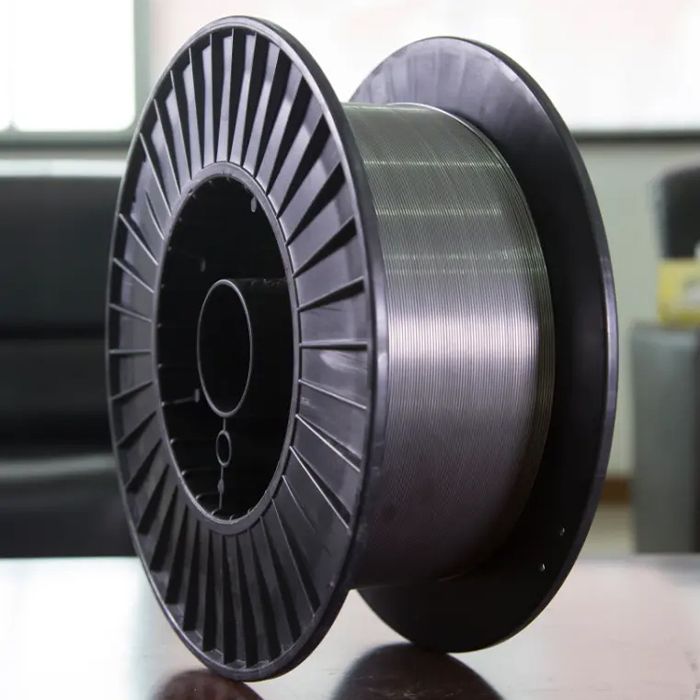
MIG welding wire is a spooled filler metal made of a base metal core, small alloying additions, and sometimes a copper coating or a flux filling — the composition sets arc behaviour, spatter, bead shape, and weld strength.
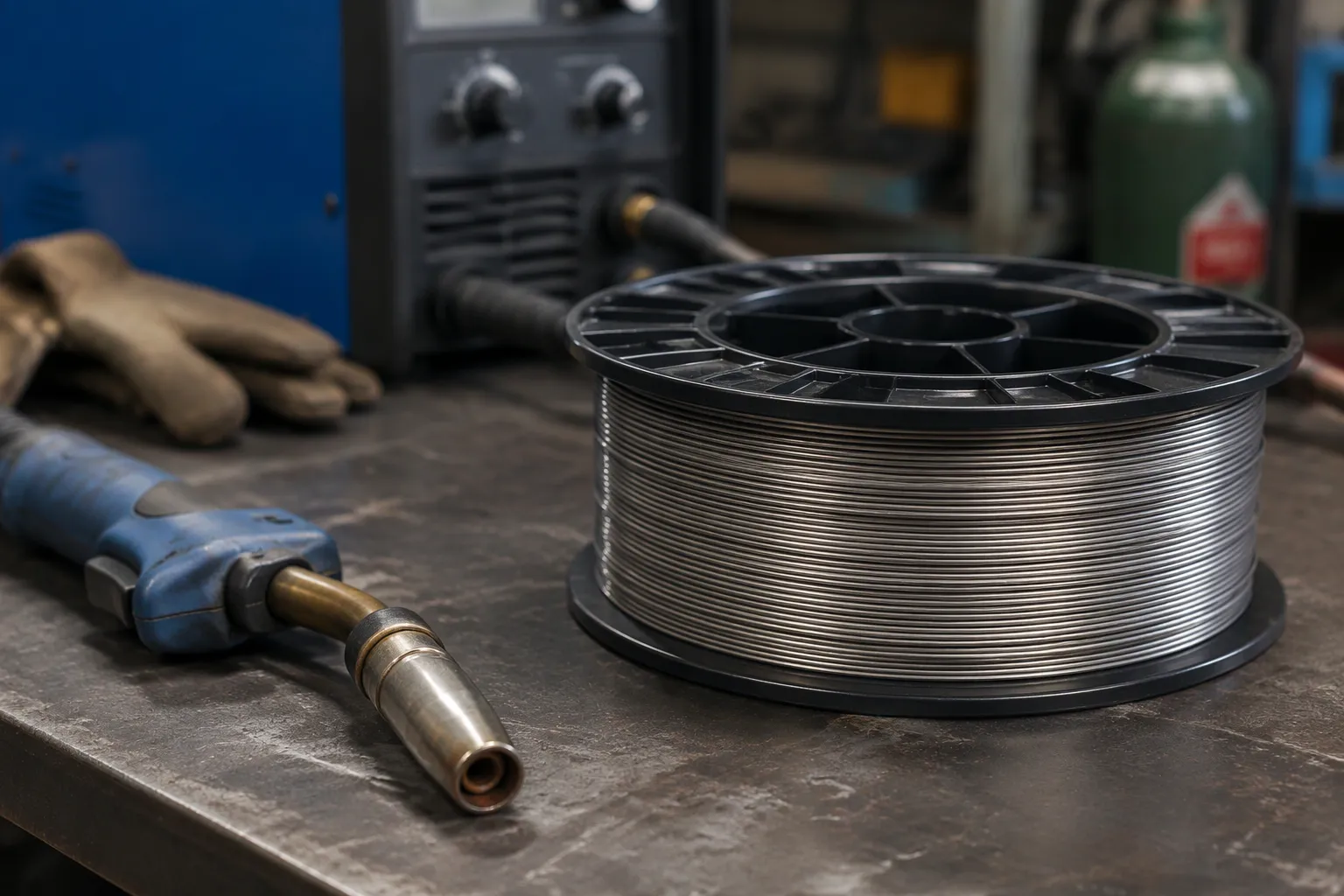
A MIG welding wire spool and torch in a workshop setting. Image from the original article.
Key Takeaways
MIG welding wire has three main parts: a base metal core, alloying elements, and a coating or flux core.
The base metal core is usually carbon steel, stainless steel, or aluminum, and it should match the metal you are welding.
Alloying elements like silicon and manganese help remove oxygen from the weld pool and reduce defects.
Stainless steel wire contains chromium and nickel to resist rust and match the parent metal.
Solid wire needs external shielding gas to protect the weld, while flux-cored wire creates its own gas shield.
Choose solid wire for indoor, calm conditions and flux-cored wire for outdoor or windy sites.
Match the wire composition to the base metal and job conditions to get strong, clean welds.
Premium wire may cost more, but it can save time and money by reducing spatter and rework.
MIG welding wire is a spooled filler metal. It has three parts: a base metal core, small amounts of alloying elements, and sometimes a thin coating or a flux core. The core is usually carbon steel, stainless steel, or aluminum. Manufacturers pick the mix to match the workpiece. Composition matters because it controls arc stability, spatter levels, bead appearance, and weld strength. A wire that matches the base metal runs smoother and produces a stronger joint. So how does each base metal change the wire's makeup?
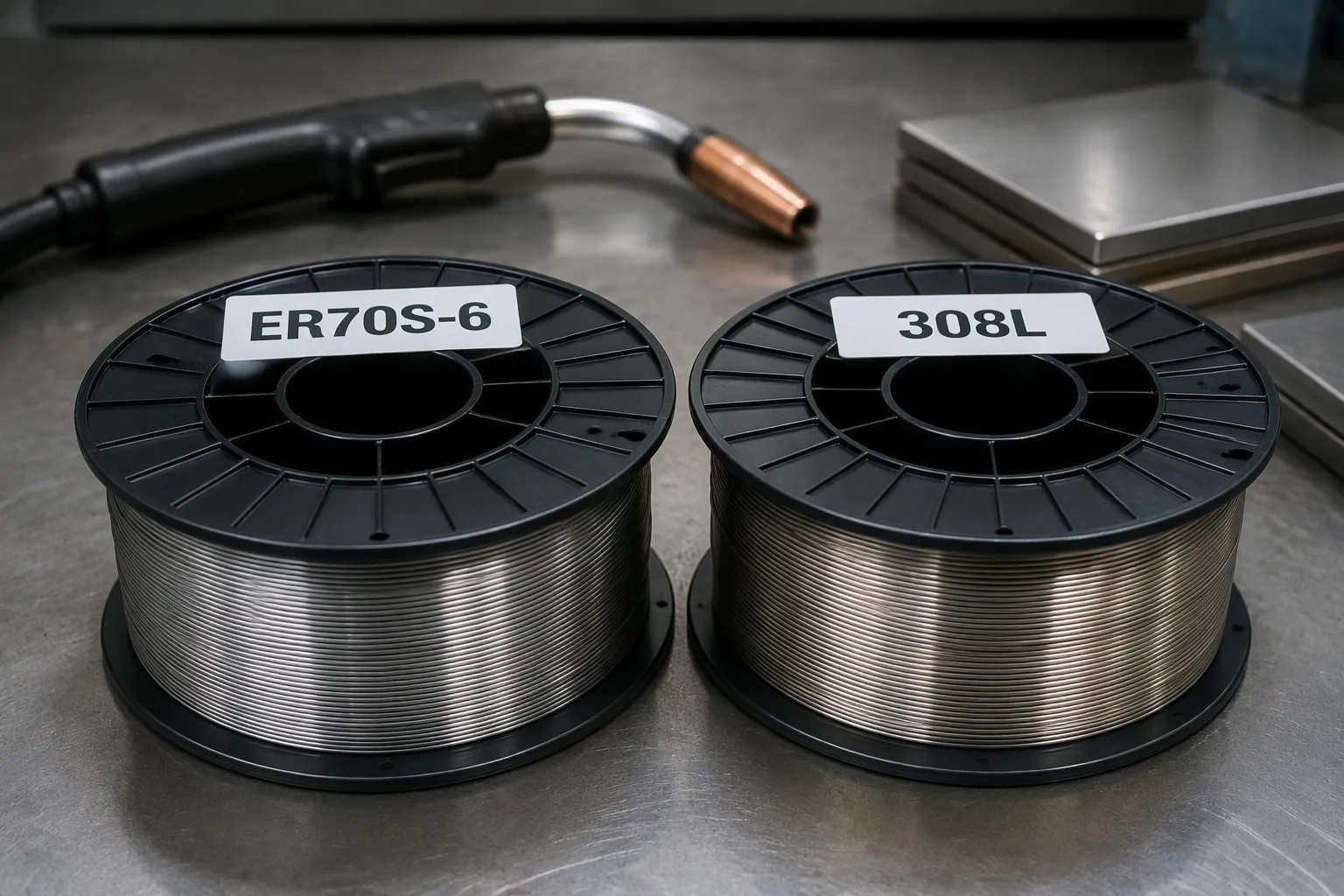
Spools labelled ER70S-6 and 308L, the two most commonly compared filler families. Image from the original article.
Carbon Steel
Composition and Common Grades
Carbon steel wire forms the backbone of most general fabrication work. The core is mild steel with a small carbon content, typically well under a quarter of one percent. Two grades dominate the market: ER70S-6 and ER70S-3. The "ER70S" label carries real information. "ER" stands for electrode rod, "70" means the deposited weld reaches a minimum tensile strength of 70,000 psi, and "S" signals solid wire. The trailing number tells you about deoxidizer content — a deoxidizer is an element that binds oxygen so it cannot form bubbles in the weld pool. ER70S-6 carries more silicon and manganese than ER70S-3, which makes it more forgiving on dirty or rusty plate. ER70S-3 suits clean, mill-scale-free steel and produces a slightly smoother arc on thin gauge.
Typical Applications
Fabricators reach for carbon steel wire on trailers, gates, farm equipment, structural frames, and general repair work. ER70S-6 handles the messy reality of field welding — light rust, oil residue, and imperfect fit-up. ER70S-3 shines in shop settings where operators prep material carefully and want clean, consistent beads on sheet metal and light plate.
Stainless Steel
Key Alloys and Makeup
Stainless wire swaps the plain steel core for an alloy rich in chromium and nickel. Chromium forms a passive oxide layer on the surface, and that layer blocks rust. Nickel stabilizes the crystal structure and improves toughness at low temperatures. Grade 308L is the workhorse for welding 304 stainless, the most common austenitic grade. Grade 316L adds molybdenum for extra resistance to chlorides and acids, and it matches 316 parent metal. The "L" suffix means low carbon, which reduces the risk of carbide precipitation — a condition that steals chromium from the grain boundaries and leaves them vulnerable to corrosion. The ER308, ER308L and ER308LSi comparison covers the common choices, while a separate ER308, ER309 and ER316 grade comparison sets out the broader family.
When to Use It
Food processing equipment, chemical tanks, architectural railings, and marine fittings all call for stainless wire. The wire should match the parent metal chemistry as closely as practical. Welding 304 with 308L keeps the deposit balanced. Welding 316 with 316L preserves the molybdenum boost. Mismatching grades invites corrosion at the weld seam, even when the joint looks sound.
Aluminum
Common Alloys and Properties
Aluminum wire is light, conducts heat rapidly, and demands different handling from steel wire. ER4043 and ER5356 cover most applications. ER4043 uses silicon as its main alloying addition, flows well, and suits casting repairs and general fabrication. ER5356 uses magnesium, delivers higher strength, and performs better on anodized parts and marine work. Aluminum wire is soft and prone to kinking, so feedability becomes a real concern. A spool gun or a push-pull torch helps. Spool tension needs careful adjustment — too tight and the wire deforms, too loose and it birdsnests inside the drive rolls. The aluminum welding wire FAQ and an aluminum wire selection guide walk through these choices in more detail.
Welding Challenges
Aluminum conducts heat away from the weld zone fast, so operators often need higher heat input and a preheat on thick sections. The oxide layer on aluminum melts at a much higher temperature than the base metal, which complicates arc starting. Aluminum wire also work-hardens when bent, so gentle feed paths matter. These traits make aluminum the most demanding of the three base metals for a beginning welder, yet the payoff is a strong, corrosion-resistant joint on lightweight structures.
Need Help Matching Wire to Base Metal?
Send the parent metal grade, joint conditions, and process to request a wire recommendation, a sample, and the relevant specification.
Alloying elements are the small additions that give a wire its manners. They go in at fractions of a percent, not enough to change what the base metal is. A carbon steel wire stays carbon steel. The additions exist to control how the weld pool behaves, how the bead looks, and how the finished joint holds up. A welder who understands these additions can read a wire's label and predict its behavior before striking an arc.
Silicon and Manganese
Deoxidizing the Weld Pool
Oxygen causes trouble in a weld pool. It combines with carbon and iron to form gas bubbles and oxide inclusions, and both weaken the joint. Silicon and manganese act as deoxidizers, meaning they grab oxygen before it can do damage. The resulting oxides float to the surface and join the slag, where they leave the weld clean.
A welder should care because deoxidizer content decides how forgiving a wire is. ER70S-6 carries a healthy dose of both elements, so it tolerates light rust, mill scale, and shop grime without porosity. ER70S-3 carries less, which suits clean plate and rewards good preparation. Matching the deoxidizer level to the actual condition of the steel prevents a lot of rework.
Nickel and Chromium
Corrosion Resistance
Nickel and chromium turn ordinary steel into stainless steel. Chromium reacts with air to form a thin passive layer on the surface, and this layer seals the metal against moisture and chemicals. Nickel holds the crystal structure stable and keeps the weld tough, even in cold service. Together they give stainless wire its defining property.
For a welder, the practical point is grade matching. A 308L wire carries enough chromium and nickel to match 304 parent metal. A 316L wire adds molybdenum on top, which boosts resistance to chlorides and acids. Using the right grade keeps the weld seam as corrosion-resistant as the plate around it. A mismatched grade can rust at the joint while the rest of the part stays bright.
Titanium and Zirconium
Grain Refinement and Arc Stability
Titanium and zirconium appear in tiny amounts, yet they shape the weld's internal structure. They combine with nitrogen and oxygen during solidification and limit grain growth. Finer grains mean a tougher weld that resists cracking under load. These elements also help the arc start cleanly and burn steadily.
A welder notices the difference in arc behavior. A wire with these additions tends to run with fewer interruptions and a more focused arc cone. The bead wets out evenly at the edges. On critical work, such as pressure parts or structural joints, that consistency pays off in fewer defects and less grinding. The additions cost little, and the improvement in weld quality is easy to see.
Coatings and Flux Cores
Copper Coating on Solid Wire
Conductivity and Corrosion Protection
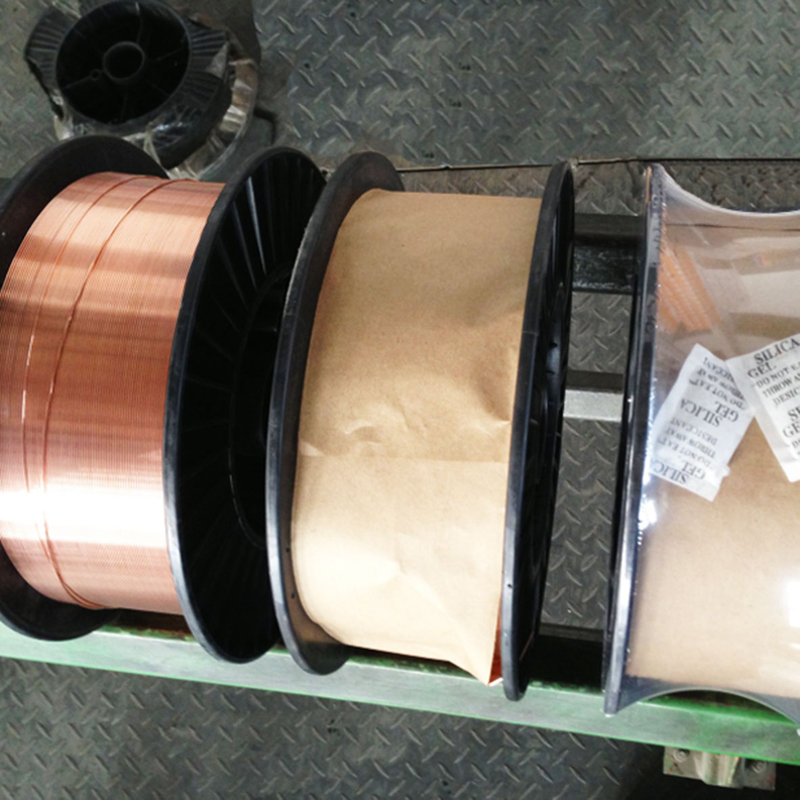
Solid MIG welding wire often wears a thin copper skin. The coating serves two jobs. First, copper conducts electricity well, so the current flows smoothly from the contact tip into the wire. A steady current path keeps the arc stable and the bead consistent. Second, the copper layer shields the steel beneath it from moisture during storage. A spool that sits on a shelf for months stays bright instead of turning rusty.
Drawbacks and Copper-Free Options
Copper coating has limits. The layer can flake off inside the liner and clog the feed path. Some shops also prefer a bare finish for certain welds or for cleaner fume levels. Copper-free wire is available for these cases. The copper-coated versus copper-free wire comparison sets out the trade-offs.
Flux Core Contents
Deoxidizers and Slag Formers
Flux-cored wire hides a powdered filling inside a hollow steel tube. That filling holds four main ingredient groups. Deoxidizers bind oxygen and keep gas bubbles out of the weld pool. Slag formers melt into a protective crust that covers the cooling bead. Alloying agents adjust the deposit's strength and chemistry. Arc stabilizers help the arc start easily and burn steadily.
How the Flux Protects the Weld
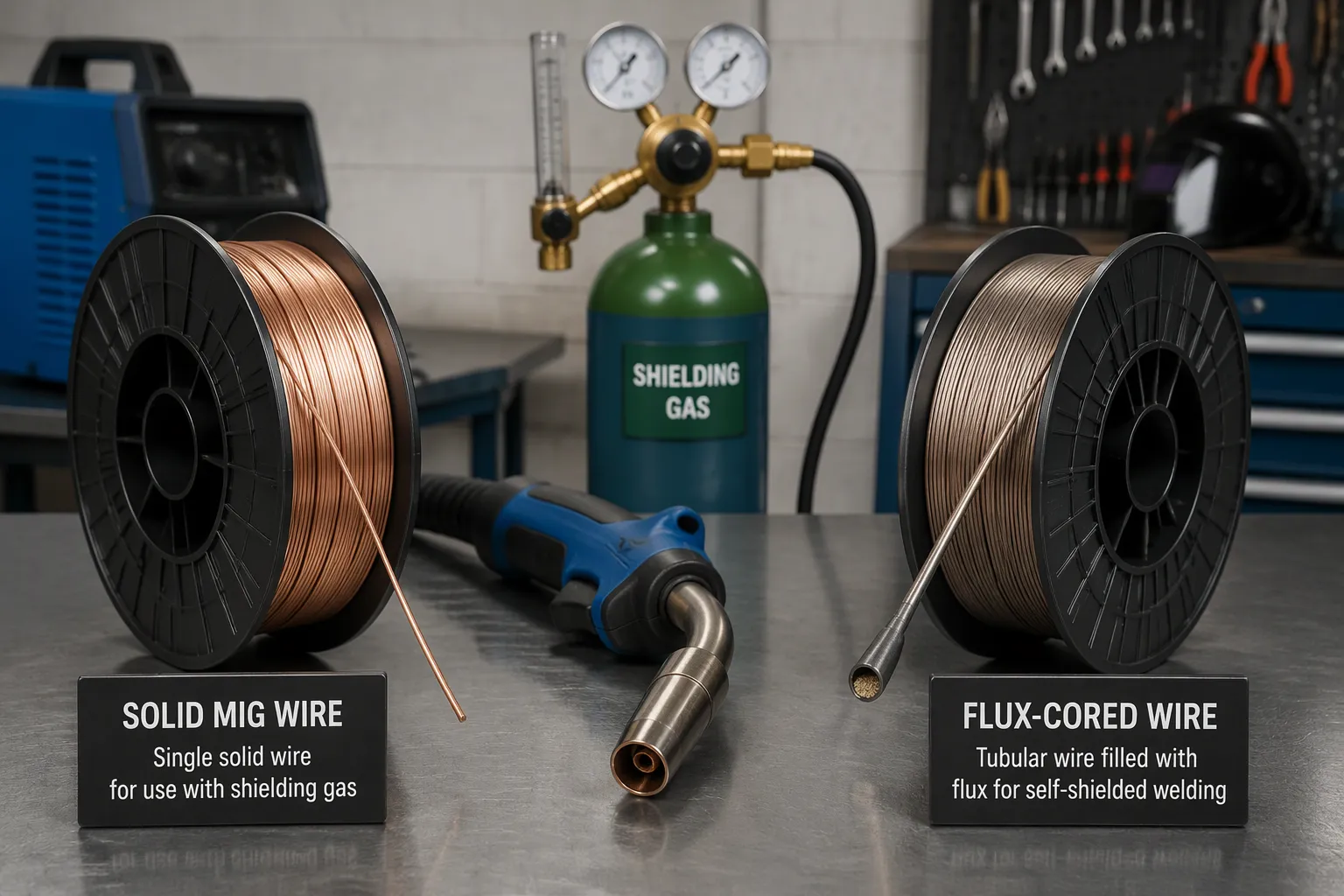
The key difference between wire types lies in shielding. Solid wire depends on an external shielding gas, usually a mix of argon and carbon dioxide, fed through the gun. Flux-cored wire generates its own protection. The flux burns and releases gas around the arc, and the slag blanket seals the bead as it cools. This self-shielding trait lets operators weld outdoors where wind would blow away a gas cloud.
Solid vs. Flux-Cored Wire
Solid wire on the left, flux-cored wire on the right, with the shielding gas set-up used by the solid wire. Image from the original article.
Metal-cored and submerged arc wires also exist as additional categories, yet solid and flux-cored wires cover most everyday work.
Solid Wire Composition
Solid wire is a single, uniform strand of metal. The core carries the alloying elements throughout its full cross section, and the surface may wear a thin copper coating. Nothing sits inside the wire. Every bit of shielding must come from outside the gun.
Shielding Gas Requirements
Solid wire needs an external shielding gas to protect the molten pool. The gas flows through the gun and forms a cloud around the arc. This cloud pushes away the surrounding air, which would otherwise introduce oxygen and nitrogen into the weld. Common choices include mixes of argon and carbon dioxide for carbon steel, and argon-rich blends for stainless and aluminum. Gas flow rate matters. Too little flow leaves the pool exposed, and too much flow creates turbulence that pulls air into the stream. Operators set the rate at the regulator and check it with a flow meter before running a bead. The gases themselves are classified under EN ISO 14175, which covers gases and gas mixtures for fusion welding.
Typical Uses
Solid wire fits indoor shop work where the air stays calm. It shines on thin sheet metal, automotive panels, and clean fabrication runs. The wire feeds smoothly at high travel speeds, and the operator gets a clear view of the joint. Solid wire also suits stainless and aluminum work when the right gas blend is on hand. A shop with a steady gas supply and controlled conditions gets consistent results from solid wire all day.
Flux-Cored Wire Composition
The flux-cored wire range starts with a hollow steel tube packed with powdered minerals and metals. The filling carries deoxidizers, slag formers, alloying agents, and arc stabilizers. This internal chemistry changes how the wire behaves at the arc. Flux-cored wires are available for mild steel, low-alloy steel, stainless steel, and nickel alloys, so the category covers a wide range of base metals.
Self-Shielding Capabilities
The flux generates its own gas cloud as it burns. That cloud shields the weld pool without any external gas cylinder. The slag blanket then covers the cooling bead and seals it from the air. This self-shielding trait lets operators work outdoors, where wind would scatter a gas cloud from a solid wire setup. Some flux-cored wires still run with a gas assist, and those versions deliver a smoother finish. The self-shielded versions trade some bead appearance for portability. The E71T-1 versus ER70S-6 comparison and the English-language comparison cover the same pairing for different audiences.
Typical Uses
Flux-cored wire fits field work, structural steel, and heavy plate. It deposits metal quickly and penetrates deeply on thick sections. Windy sites, outdoor repairs, and jobs far from a gas supply all favor this wire. The slag layer protects the bead during cooling, which helps on large multipass welds. Operators simply chip and brush the slag between passes. Each wire type has a home, and the job conditions usually point to the right one.
Two everyday spool types show how the composition differences appear on the shelf.
ER70S-6 MIG Welding Wire
Copper-coated solid wire with higher silicon and manganese for forgiving work on light rust and mill scale.
The parent metal sets the starting point for wire selection. Solid wire composition should closely match the plate it joins. A 304 stainless part calls for 308L wire. A 6061 aluminum part pairs well with ER5356. Carbon steel work usually lands on ER70S-6 or ER70S-3, depending on surface condition. A close match keeps the weld's strength and corrosion resistance in line with the surrounding metal.
Flux-cored wire offers more flexibility here. Its flux core carries alloying agents that adjust the deposit, so one wire family can cover a range of base metals. A fabricator who welds several steel grades in a week may find flux-cored wire simplifies inventory. Solid wire rewards a shop that stocks grades to match each job.
Matching the Environment
Indoor, Outdoor, and Windy Conditions
The job site shapes the choice as much as the metal does. Solid wire depends on an external shielding gas cloud, and a breeze scatters that cloud in seconds. Indoor shop work with steady air suits solid wire well. Outdoor work on a windy day favors self-shielded flux-cored wire, which generates its own gas protection at the arc.
Weather also affects storage. Copper-coated solid wire resists moisture on the shelf, which helps on damp sites. Operators who order spools for long outdoor projects should plan dry storage either way. A rusty spool feeds poorly and welds worse.
Balancing Performance and Cost
When Premium Composition Pays Off
Wire price is only one line in the cost sheet. A premium grade that runs with less spatter saves grinding time and filler waste. A wire that feeds smoothly cuts downtime from birdnesting and tip changes. On high-volume runs, those savings often outweigh a higher spool price. On one-off repairs, a standard grade usually does the job at lower cost.
Buyers comparing wholesale quotes should weigh grade, diameter, and spool size together. Published supplier ranges cover ER70S-6, ER70S-3, ER70S-G, SG2/G3Si1, and SG3/G4Si1 wires to AWS A5.18 and EN 440 standards. Diameters run from 0.8mm to 2.0mm, with spools from 0.5kg to 250kg plus drum packs. Copper-free and custom alloy options are available for specific processes.
Supplier background is a separate check. One China-based manufacturer has supplied welding wire since 1999, states ISO 9001 certification and CE certification for its wire, and reports exports to more than 100 countries across shipbuilding, automotive, pressure vessel, and structural steel work. Buyers can request samples and technical documents before a first order, and check that those documents cover the exact wire grade being quoted. Wire electrode classification for non-alloy and fine-grain steels is covered by EN ISO 14341.
Conclusion
MIG welding wire has three parts: a base metal core, small alloying additions, and a coating or flux core. Each part shapes how the wire behaves at the arc. The core sets strength and chemistry. Alloying elements control arc stability and bead appearance. The coating or flux core guards the molten pool and cuts spatter. Together they decide weld strength and finish quality.
Matching that composition to the parent metal and the job conditions remains the key decision for any fabricator. A welding wire FAQ can answer the common questions before a first order is placed.
Ready to Confirm a Wire Specification?
Send the base metal, process, and spool size you need to receive grade options, technical data, and a quotation.
What does the "ER70S-6" label on a wire spool mean?
The label spells out the wire's job. "ER" means electrode rod, "70" means the weld reaches 70,000 psi tensile strength, and "S" means solid wire. The final number signals deoxidizer content, so ER70S-6 carries more silicon and manganese than ER70S-3.
Can one wire type weld every metal?
No. Carbon steel, stainless steel, and aluminum each need a matching filler. A 304 stainless part calls for 308L wire, and a 6061 aluminum part pairs with ER5356. Using the wrong grade weakens the joint or invites corrosion at the seam.
Why does solid wire need shielding gas?
Solid wire carries no internal protection. An external gas cloud, fed through the gun, pushes air away from the molten pool. Without that cloud, oxygen and nitrogen enter the weld and cause porosity. Flux-cored wire skips the cylinder because its core generates its own gas.
What does the copper coating on solid wire do?
The copper skin carries two jobs. It conducts current smoothly from the contact tip into the wire, which keeps the arc steady. It also shields the steel from moisture during storage. Copper-free options exist for shops that prefer a bare finish.
Is flux-cored wire stronger than solid wire?
Neither type wins on strength alone. Flux-cored wire deposits metal fast and penetrates deeply on thick plate, which suits structural work. Solid wire gives clean beads on thin sheet and shines indoors. The job conditions usually point to the right choice.
How does a welder pick the right wire diameter?
Thin sheet favors a smaller diameter, which keeps heat input low and limits burn-through. Thick plate takes a larger diameter for faster deposition. The machine's amperage range and the joint design also shape the call. Commonly supplied MIG wire diameters run from 0.8mm to 2.0mm.
Does wire composition affect spatter?
Yes. Deoxidizer levels, coating quality, and alloy balance all shape how the pool behaves. A wire matched to the parent metal runs with a steadier arc and less spatter. Mismatched chemistry often means extra grinding and rework.
When should a buyer choose a premium grade?
High-volume runs reward premium wire. Smoother feed and lower spatter cut downtime and grinding time, and those savings often outweigh a higher spool price. One-off repairs usually do fine with a standard grade at lower cost.
Data notes: the ER70S-6 and ER70S-3 descriptions, grade-to-base-metal pairings, and the 0.8mm to 2.0mm diameter range come from the original article. Supplier-specific figures — since 1999, ISO 9001 and CE certification, exports to more than 100 countries — are stated on the manufacturer's home and About pages and are presented here as manufacturer-reported background, not as performance claims.
Image notes: the three illustrations from the original article were retained because their visible labels match the grades and wire types discussed, and no fabricated certification or test data appear in them.
Internal links: all nine original links to asweld.com are preserved, with anchor text matched to the page each link opens. Four original links used non-English locale paths; those URLs are kept intact and the English equivalents are listed alongside where they add value.
Published by SANZHONG WELD, Changzhou, Jiangsu, China.