AWS A5.8 S221CW-BRASS WELDING ROD Features
-
AWS A5.8 S221CW-BRASS WELDING ROD
-
Designed for welding heat treatable base alloys
-
Higher melting point and more fluidity
-
Suitable for sustained elevated temperature service
-
All position, include vertical down welding
-
Gray - white(post anodized) color
| Standard:AWS A 5.8 S221CW | Chemical Composition % |
| Cu | Sn | Si | Zn |
| Grade S221CW | 59.0 ~ 61.0 | 0.8 ~ 1.0 | 0.15 ~ 0.35 | Rest |
S221CW-BRASS WELDING ROD
![]() AWS A5.8 S221CW-BRASS WELDING ROD.pdf
AWS A5.8 S221CW-BRASS WELDING ROD.pdf
S221CW-BRASS WELDING ROD Specifications
| Type | Spool (MIG) | Tube (TIG) |
| Specification ( MM ) | 0.8、0.9、1.0、1.2、1.6、2.0 | 1.6、2.0、2.4、3.2、4.0、5.0 |
| Package | S100/1kg S200/5kg S270,S300/15kg-20kg | 5kg/box 10kg/box length :1000MM |
| Mechanical Properties | Tensile Strength Mpa | Elongation after fracture A(%) |
| 350 ~ 450 | ≥ 25 |
S221CW-BRASS WELDING ROD video
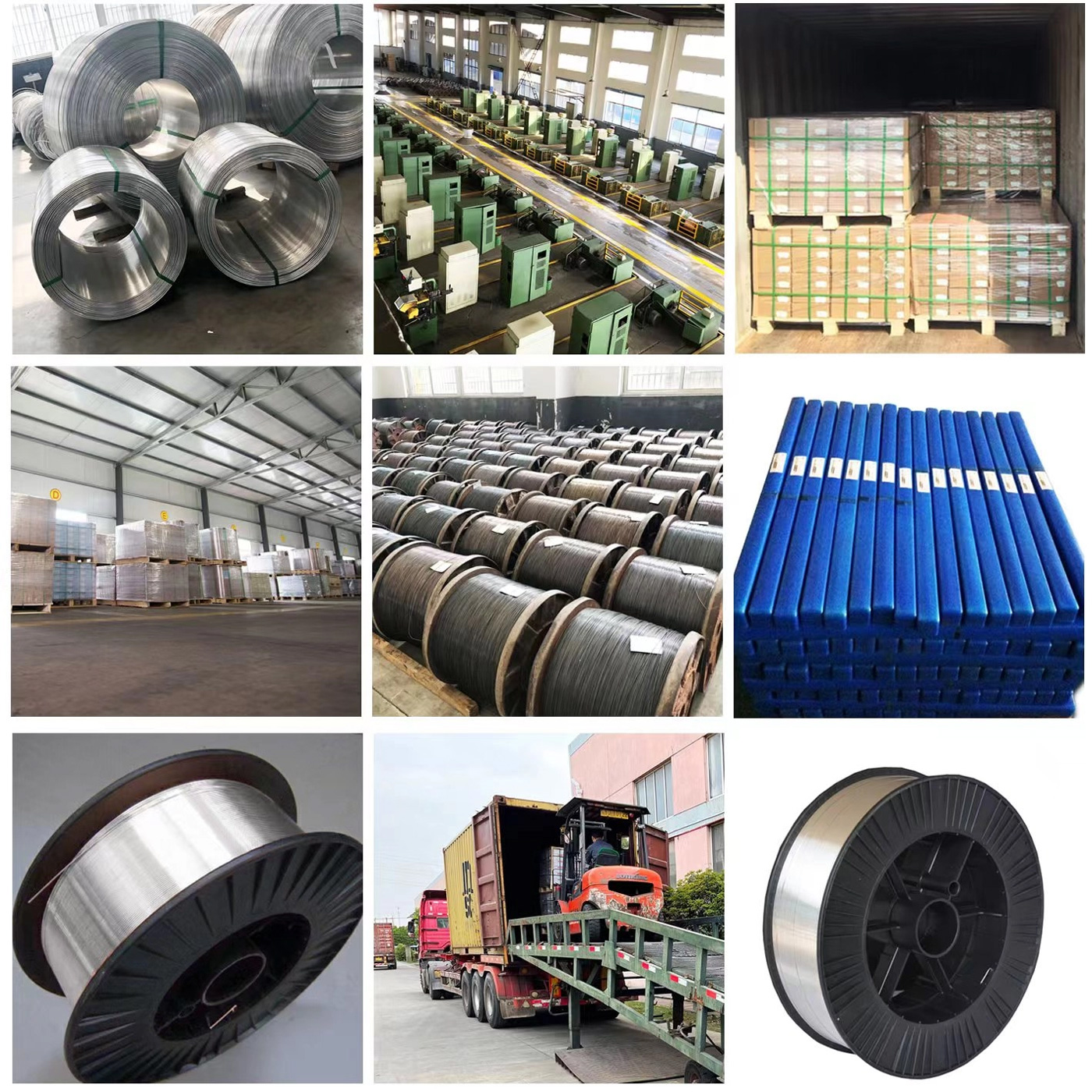
S221CW-BRASS WELDING ROD Factory Show

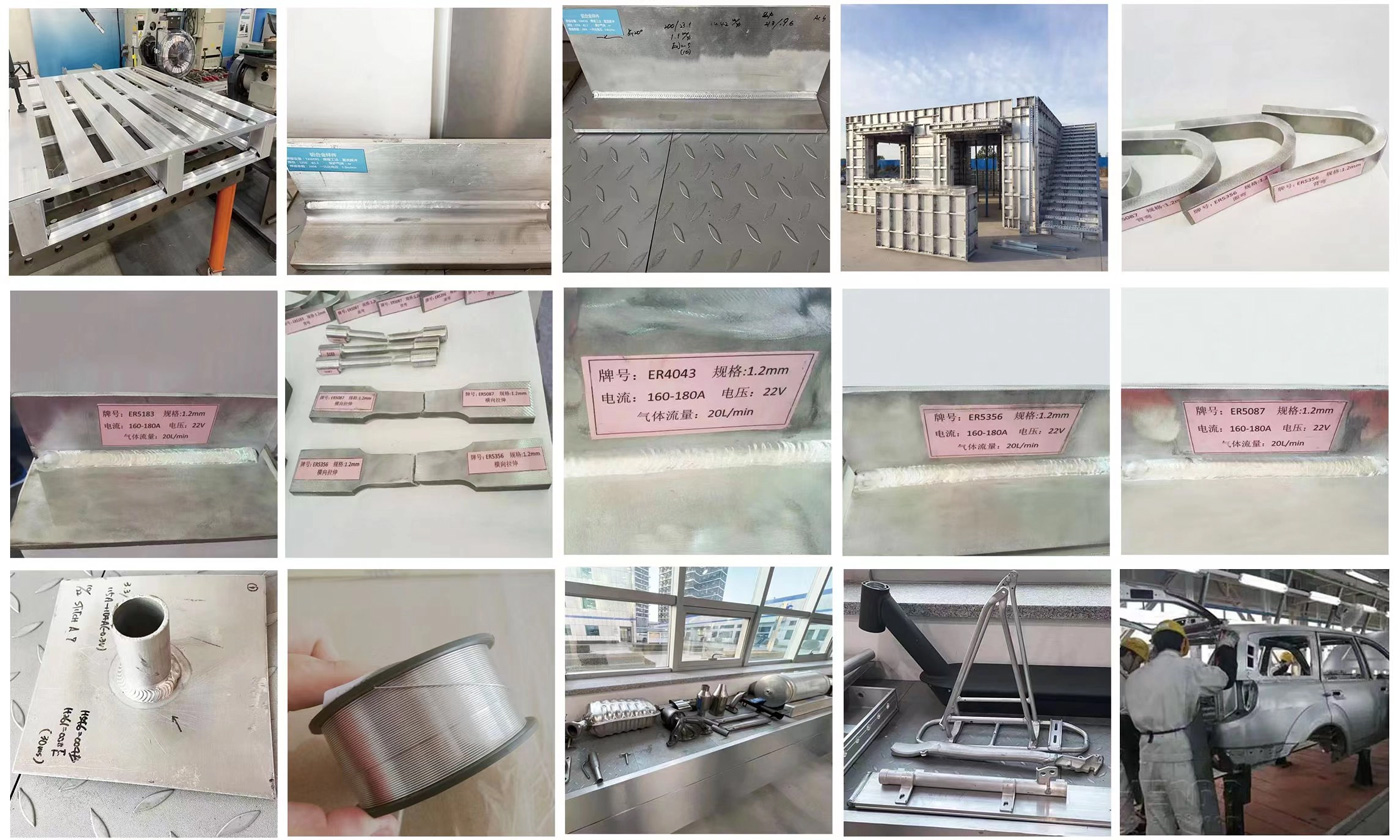
S221CW-BRASS WELDING ROD Application
S221CW-BRASS WELDING ROD is used in railway locomotives,welding arc stability, beautiful welding, strong crack resistance. Welding operation and fluidity of molten gold are better.

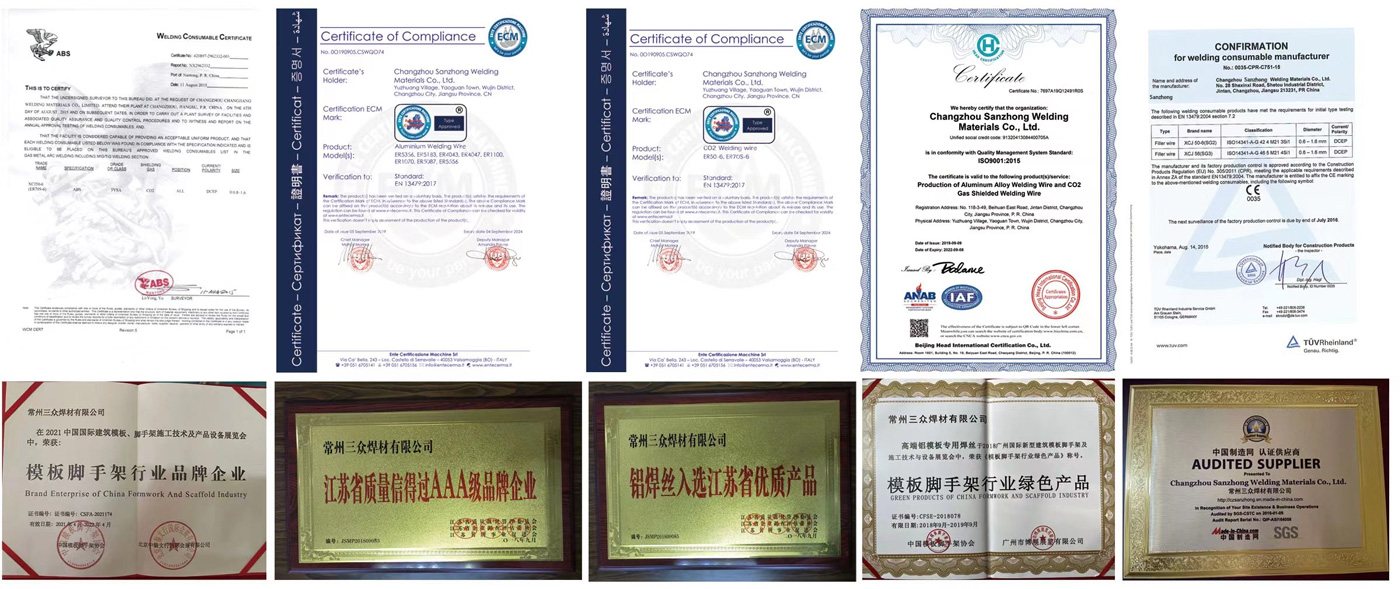
S221CW-BRASS WELDING ROD Certification

S221CW-BRASS WELDING ROD WHAT YOU GET
-
S221CW-BRASS WELDING ROD
-
Choose Your S221CW-BRASS WELDING ROD Size in mm: 0.8mm / 0.9mm / 1.0mm / 1.2mm/ 1.6mm
-
Choose Your S221CW-BRASS WELDING ROD Size in inch: 0.030 / 0.035 / 0.040 / 0.045/ 3/16 - 3/64
-
Choose Your S221CW-BRASS WELDING ROD mig Spool Weight(Package): 0.5kg / 2kg / 7kg
-
Choose Your S221CW-BRASS WELDING ROD Size: 1.2mm/ 1.6mm/ 2.0mm/ 2.4mm/ 3.2mm/ 4.0mm
-
Choose Your S221CW-BRASS WELDING ROD Weight(Package): 5kg / 10kg / 1LB / 2LB / 4.5LB / 20LB
S221CW-BRASS WELDING ROD knowledge
-
S221CW-BRASS WELDING ROD Requirements
This specification covers the classification, chemical composition, mechanical properties, and application requirements for the S221 brass welding rod (AWS RBCuZn-A).
Classification & Standards
AWS Classification: RBCuZn-A (UNS C47000)
Applicable Standard: AWS A5.8 / A5.8M, ASME SFA-5.8
-
S221CW-BRASS WELDING ROD chart Filler Metal Identification
dentification CategoryDesignation / Specification
AWS Classification RBCuZn-A
UNS Number C47000
Common Trade Names S221, HS221, Tin Brass Rod, Low Fuming Bronze Rod
Applicable Standard AWS A5.8 / A5.8M, ASME SFA-5.8
Material Type Copper-Zinc-Tin Alloy (Tin Brass)
Key Alloying Elements Cu (57-61%), Sn (0.25-1.0%), Si (0.15-0.35%), Zn (Balance)
Melting Point: Approximately 890°C – 905°C.
Typical Application: Used for gas welding of brass and copper, and for brazing steel, cast iron, and dissimilar metals.
Product Forms: Available as round rods in various diameters (e.g., 1.2mm – 6.0mm) and can sometimes be customized into strips or coils.
Surface Coating: Some variants feature a protective blue coating to prevent oxidation during storage; flux-coated versions are designated as S221F .
-
welding steel with S221CW-BRASS WELDING ROD Packaging
Filler metal shall be suitably packaged to ensure against damage during shipment and storage under normal conditions.
The following product information (as a minimum of low temperature aluminum welding wire)
shall be legibly marked so as to be visible from the outside of each unit package:
(1) AWS specification and classification designation (year of issue may be excluded best wire for welding aluminum)
(2) Supplier's name and trade designation
(3) Size and net weight
(4) Lot, control, or heat number
S221CW-BRASS WELDING ROD WARNING
-
Welding fumes can be hazardous to your health. This product contains zinc, and during welding, it produces zinc oxide fumes. Overexposure to these fumes can cause "Metal Fume Fever," with flu-like symptoms such as chills, fever, body aches, and nausea . Work in a well-ventilated area or use a local exhaust (fume extraction) system to keep fumes away from your breathing zone.
-
Wear correct eye, ear, and body protection. Use welding goggles or a helmet with a shade 4-5 lens for gas welding , along with heat-resistant gloves and protective clothing . To avoid skin contact, follow standard precautions: wash thoroughly after handling, and do not allow contaminated work clothing to leave the worksite.
-
Avoid overheating. Excessive heat will cause zinc to evaporate from the alloy, producing excessive white fumes and leading to weld defects like porosity and reduced joint strength . Use a neutral or slightly oxidizing flame and control the heat input carefully to minimize zinc loss. Also, note that this filler metal is not suitable for furnace brazing in a controlled atmosphere due to zinc volatilization issues.
S221CW-BRASS WELDING ROD FAQ
S221CW-BRASS WELDING ROD 10 famous brand are which factory?
1:sanzhong, 2:giant, 3:safra, 4:Hobart, 5:SAF, 6:ALCOTEC, 7:INDALCO, 8:HYUNDAI, 9:Oxford, 10:golden bridge
S221CW-BRASS WELDING ROD supplier and factories locates in such countries like?
China,America,Brazil,England,Russia,Poland,India,Pakistan,NewZealand,Korea,Australia,Dubai,Turkey,Indonesia,UAE.
S221CW-BRASS WELDING ROD have how many types?
AWS ClassificationCommon DesignationKey Characteristics & Application
RBCuZn-A S221, HS221 Tin brass (Cu 59%, Sn 0.8%, Si 0.2%). General-purpose braze welding of copper, steel, and cast iron.
RBCuZn-C SM 19 A different alloy in the RBCuZn series for brazing applications.
RBCuZn-D SM 21, S225 Contains nickel (approx. 10%) for enhanced corrosion resistance and strength. Brazing of steel, nickel, and carbide alloys.
Even within the same S221 (RBCuZn-A) classification, you can find variations based on physical attributes :
Diameter Options: The rods are available in a range of diameters (e.g., 1.2mm, 1.6mm, 2.0mm, 3.2mm) to suit different joint thicknesses and welding requirements.
Surface Coating: Many S221 rods come with a blue protective coating that prevents oxidation and corrosion during storage and use . This is a variation in the product's surface finish.
Flux Coating: Brass welding rods can also be found with a flux coating already applied, which simplifies the welding process, although this specific variant was not explicitly noted for the S221 model in the search results.
In summary, the "types" of S221CW brass welding rods can be understood as:
Core Alloy Types: Different AWS classifications within the RBCuZn series (A, C, D).
Product Variations: Different physical dimensions (diameter) and coatings (protective or flux) available for the RBCuZn-A classification.
How to choose a suitable S221CW-BRASS WELDING ROD?or what type of filler wire is best for wire feed welding S221CW-BRASS WELDING ROD?
S221CW belongs to the AWS classification RBCuZn-A, a copper-zinc-tin alloy. Here’s a breakdown of the selection factors:
Base Metal Compatibility: This rod is versatile. It's suitable for braze welding copper, steel, cast iron, nickel alloys, and for joining dissimilar metals like copper to steel. For the strongest joints, it's best when the rod's composition is similar to the base metal.
Process and Heat Source: S221 rods are typically used with an oxy-acetylene torch, which is the most common and recommended method. They can also be used for TIG welding (DCEN)
with 100% Argon shielding gas, offering a clean, precise result with fewer fumes. However, if you're planning to use a wire feeder for a MIG process, S221 is generally not the standardchoice because MIG welding of brass is complex and less common due to zinc fuming.
Rod Features: You can choose between standard rods or flux-coated (FC) versions like NB-CuZn-A-FC, which simplify the process by eliminating the need for a separate flux application. A flux (like borax-boric acid) is essential for most applications to prevent oxidation and help the metal flow.
Diameter and Size: The rod diameter should match your joint thickness and heat input. Common diameters range from 1.6mm to 4.0mm. For example, a 2mm diameter rod was used in a study for TIG welding brass components.
Shift to MIG-Compatible Alloys: For MIG welding, you should look for filler wires from the AWS A5.7 specification (Copper and Copper-Alloy Bare Welding Rods and Electrodes). Common options for applications similar to S221 include:
ERCuSn-A (Phosphor Bronze): Good for welding copper, bronze, and some steels. It offers good ductility and corrosion resistance.
ERCuAl-A1 or ERCuAl-A2 (Aluminum Bronze): These are high-strength wires often used for joining copper, steel, and cast iron, and are available as MIG wire.
ERCuNi (Copper-Nickel): Excellent for marine applications and welding copper-nickel alloys.
Key Differences: MIG welding of brass is more challenging because the high heat can cause zinc to evaporate, creating fumes and weld defects. Aluminum bronze or silicon bronze wires are often preferred for their lower zinc content and better arc stability.