>DIN 8555 MF 10-GF-65-G AWS A5.21-A5.22 hardfacing welding wire Features
-
DIN 8555 MF 10-GF-65-G AWS A5.21-A5.22 hardfacing welding wire
-
Designed for welding heat treatable base alloys,gasless flux-cored mig wire
-
Suitable for sustained elevated temperature service
-
All position, include vertical down welding,gasless flux cored mig wire
-
Gray - white(post anodized) color
| Standard: AWS A 5.21/5.22 | Chemical Composition % |
| C | Mn | Si | Cr | Nb | Fe |
| Grade hardfacing | Sample1 | 5.6 | 0.2 | 1.3 | 20.2 | 6.7 | Rest |
| Sample2 | --- | --- | --- | --- | --- | --- |
>DIN 8555 MF 10-GF-65-G AWS A5.21-A5.22 hardfacing welding wire Down Load
![]() DIN 8555 MF 10-GF-65-G AWS A5.21-A5.22 hardfacing welding wire.pdf
DIN 8555 MF 10-GF-65-G AWS A5.21-A5.22 hardfacing welding wire.pdf
>DIN 8555 MF 10-GF-65-G AWS A5.21-A5.22 hardfacing welding wire Specifications
| Specification (MM) | 0.8、0.9、1.0、1.2、1.6、2.0 | Package | S100/1kg S200/5kg S270/15kg |
| X - ray detection requirements | Deposited metal diffusible hydrogen (Chromatography or Mercury): – |
| Mechanical Properties | Yield Strength (Mpa) | Tensile Strength (Mpa) | Elongation(%) | AKV Impact Energy(J) -20℃ |
| – – – | ≥ 550 | – – – | – – – |
| MIG Welding Current - A | Diameter(MM) | 1.0 | 1.2 | 1.4 | 1.6 |
| F | 80 – 200 | 160 – 220 | 170 – 250 | 180 – 280 |
| V – up / OH | 55 – 120 | 120 – 180 | 140 – 200 | 160 – 220 |
>DIN 8555 MF 10-GF-65-G AWS A5.21-A5.22 hardfacing welding wire video
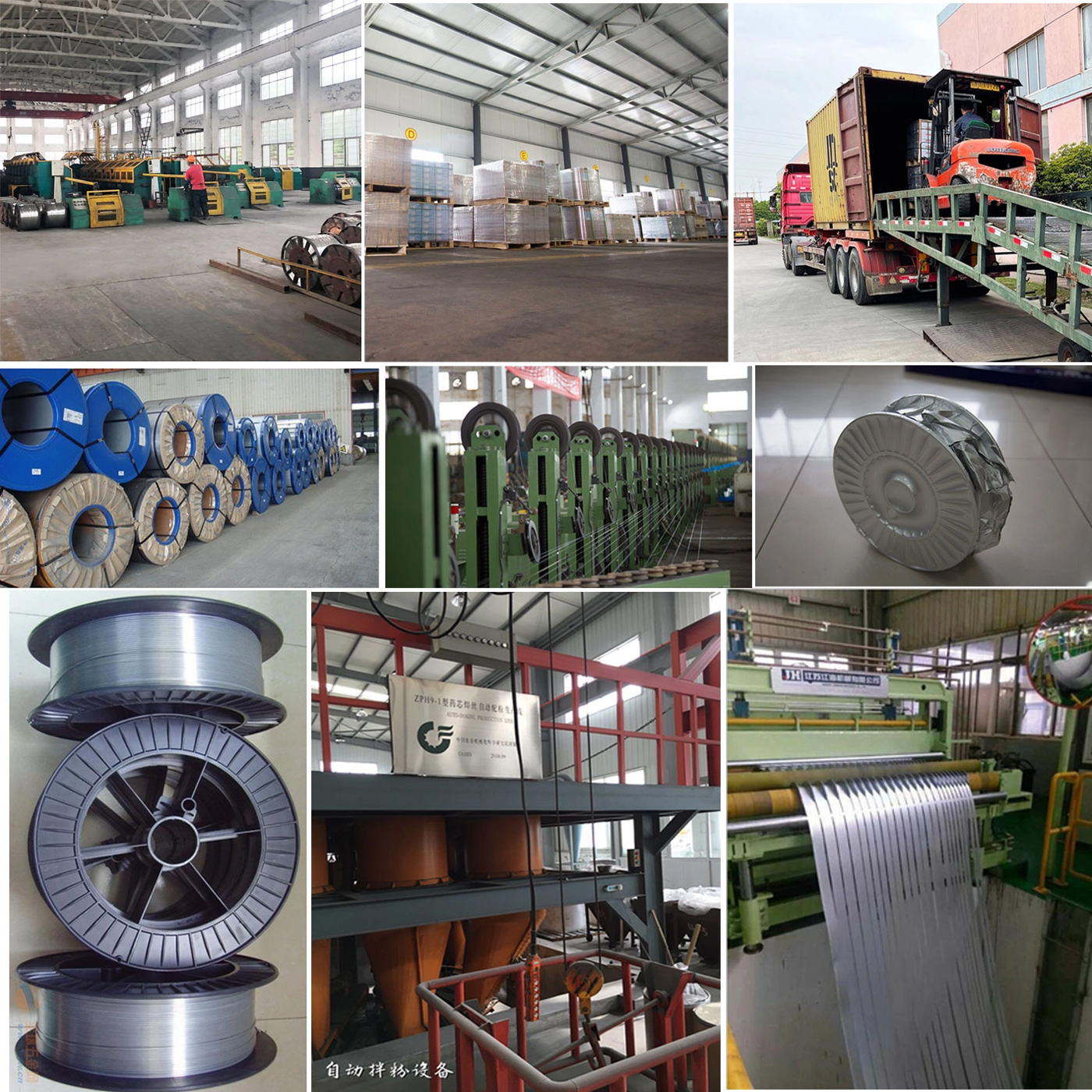
>DIN 8555 MF 10-GF-65-G AWS A5.21-A5.22 hardfacing welding wire Factory Show

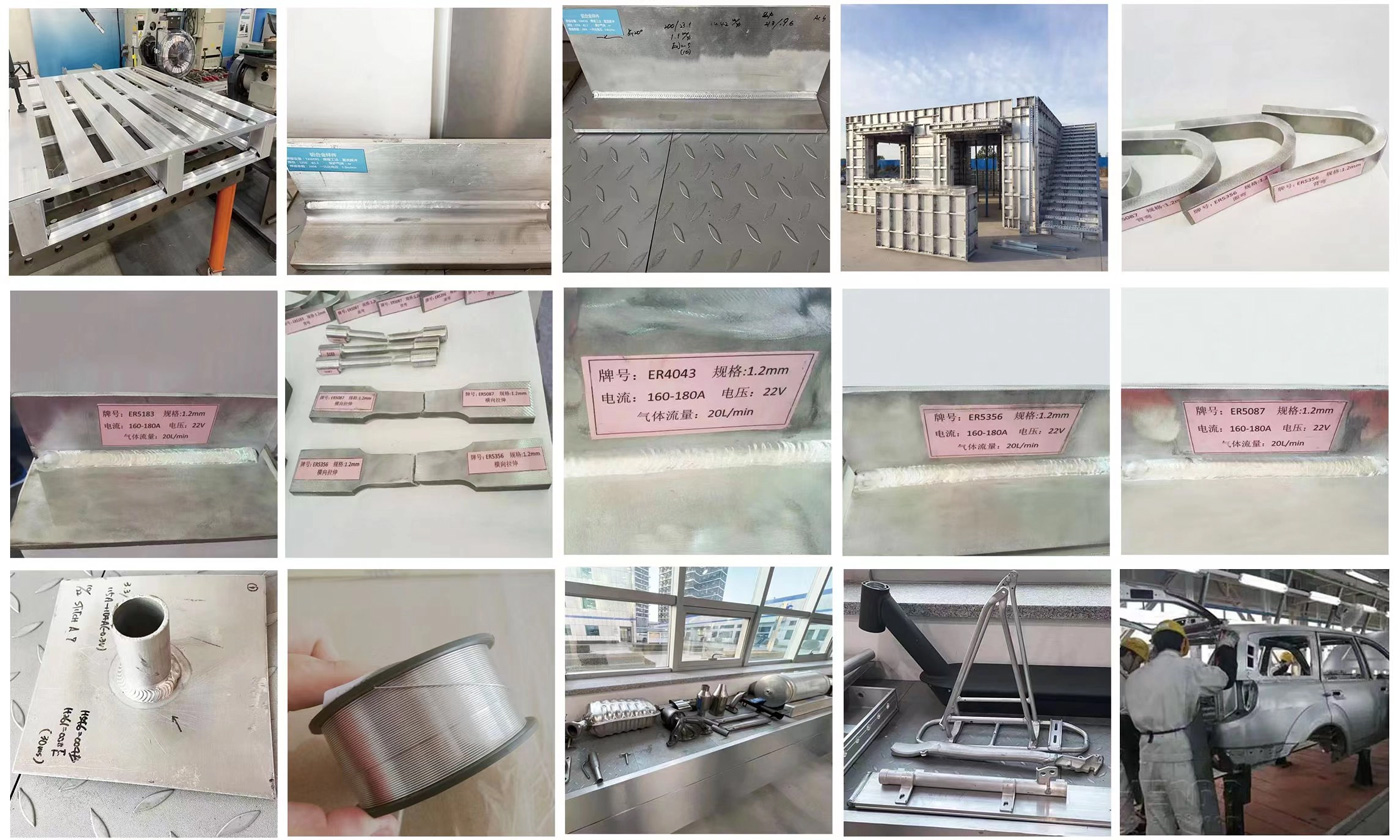
>DIN 8555 MF 10-GF-65-G AWS A5.21-A5.22 hardfacing welding wire Application
The DIN 8555 MF 10-GF-65-G AWS A5.21-A5.22 hardfacing welding wire of structural parts of carbon steel is the most widely used in the welding of important structures such as shipbuilding.

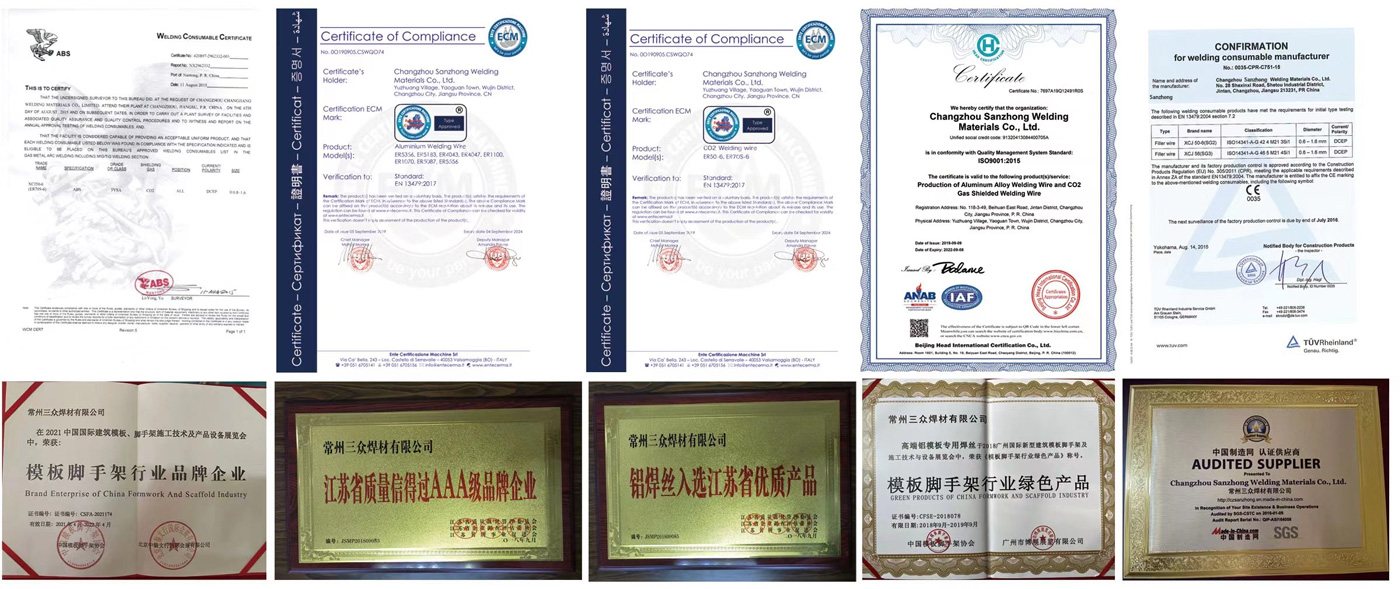
>DIN 8555 MF 10-GF-65-G AWS A5.21-A5.22 hardfacing welding wire Certification

>DIN 8555 MF 10-GF-65-G AWS A5.21-A5.22 hardfacing welding wire WHAT YOU GET
-
Best DIN 8555 MF 10-GF-65-G AWS A5.21-A5.22 hardfacing welding wire
-
Choose Your hardfacing welding wire Size in mm: 0.8mm / 0.9mm / 1.0mm / 1.2mm/ 1.6mm
-
Choose Your hardfacing welding wire Size in inch: 0.030 / 0.035 / 0.040 / 0.045/ 0.063/ 0.079 / 3/16
-
Choose Your hardfacing welding wire Spool Weight(Package): 0.5kg / 2kg / 7kg
-
Choose Your hardfacing welding wire Size: 1.2mm/ 1.6mm/ 2.0mm
-
Choose Your Wire tube Weight(Package): 2kg / 5kg / 10kg / 1LB / 2LB / 4.5LB / 15.5LB / 20LB
>DIN 8555 MF 10-GF-65-G AWS A5.21-A5.22 hardfacing welding wire knowledge
-
Best DIN 8555 MF 10-GF-65-G AWS A5.21-A5.22 hardfacing welding wire Requirements
The wire's construction also has specific requirements for different productivity and application needs:
Flux-Cored Wires: Often selected for high deposition rates and the ability to create specific alloy compositions for wear resistance. They require slag removalafter welding.
Metal-Cored Wires: Preferred for high productivity, smooth arc, and low spatter, especially in automated or robotic welding applications. They are often
seamless, which reduces moisture absorption for better reliability.
Solid Wires: Chosen for clean appearance and good operator control but generally have lower deposition rates and alloy flexibility, making them less common
for severe wear applications.
-
DIN 8555 MF 10-GF-65-G AWS A5.21-A5.22 hardfacing welding wire Filler Metal Identification
When you have a specific product, look for the following identifiers:
The Standard: Look for the governing standard on the product label or datasheet (AWS A5.21, EN 14700, or DIN 8555).
The Classification Code: Within that standard, find the specific alphanumeric code that identifies the product type.
The Alloy System: The code will usually point to a specific alloy system (e.g., high carbon-chromium, martensitic steel, etc.) that dictates its hardness and wear
resistance.
1. AWS A5.21 / A5.21M (American Standard)
This specification from the American Welding Society covers bare electrodes and rods for surfacing -6-12. The system classifies products based on:
Product Form: Solid wire, metal-cored, or flux-cored composite (tubular) wire -12.
Chemical Composition: The classification is typically based on the material's alloying elements and their specific percentages -1-12.
Typical Format: An example from the standard is ERFe-1 (for a solid iron-based electrode), or other designations based on the primary alloy system.
2. EN 14700 (European Standard)
This standard is specifically designed for welding consumables for hardfacing -3-5. Its classification system uses symbols to convey key information -10:
Product Form Symbol: Letters indicate the form, such as E for covered electrode, S for solid wire/rod, or T for cored wire/rod -10.
Alloy Symbol: A numerical/letter code that identifies the chemical composition of the weld metal. For example, Fe8 in the alloy symbol E Fe8 indicates
a specificiron-based alloy composition -10.
Typical Format: An example from a manufacturer's datasheet is EN 14700: E Fe8 -10.
3. DIN 8555 (Older German Standard)
While largely superseded by EN 14700, you may still encounter this older standard -4-11. Its identification system is more complex and uses a
multi-block design:
First Block: Identifies the product form (e.g., wire electrode, rod).
Second Block: Identifies the material type (e.g., iron-rich, non-ferrous, hard metal).
Third Block: A designation number (e.g., 10) indicating the specific alloy group.
Subsequent Blocks: Provide information on the execution form and hardness grade.
Typical Format: An example from your previous questions is MF 10-GF-65-G -4.
-
DIN 8555 MF 10-GF-65-G AWS A5.21-A5.22 hardfacing welding wire Packaging
Electrodes shall be suitably packaged to ensure against damage during shipment and storage under normal conditions.
The following product information (as a minimum) shall be legibly marked so as to be visible from the outside of each unit package.
(1) AWS specification (year of issue may be excluded) and classification, along with applicable optional designators
(2) Supplier's name and trade designation
(3) Size and net weight
(4) Lot, control, or heat number
>DIN 8555 MF 10-GF-65-G AWS A5.21-A5.22 hardfacing welding wire WARNING
-
gas shielded flux cored wire,Before use, read and understand the manufacturer's instructions, Material Safety Data Sheets (MSDSs), and your employer's safety practices.
-
stainless steel flux core wire types have too many kinds ,Keep your head out of the fumes.Use enough ventilation, exhaust at the arc, or both, to keep fumes and gases away from your breathing zone and the general area.Wear correct eye, ear, and body protection.
-
flux wire welder,Do not touch live electrical parts.See American National Standard, ANSI 249.1, Safety in Welding.
>DIN 8555 MF 10-GF-65-G AWS A5.21-A5.22 hardfacing welding wire FAQ
DIN 8555 MF 10-GF-65-G AWS A5.21-A5.22 hardfacing welding wire 10 famous brand are which factory?
1:sanzhong, 2:giant, 3:bohler, 4:rural king, 5:lincoln, 6:hyundai, 7:blue demon, 8:esab, 9:Oxford, 10:golden bridge
DIN 8555 MF 10-GF-65-G AWS A5.21-A5.22 hardfacing welding wire supplier and factories or wholesale locates in such countries like?
China,America,Brazil,England,Russia,Poland,India,Pakistan,NewZealand,Korea,Australia,Dubai,Turkey,Indonesia,UAE.
How to choose a suitable DIN 8555 MF 10-GF-65-G AWS A5.21-A5.22 hardfacing welding wire?
This is the most critical step. Different alloys protect against different types of wear.
Severe Abrasion (with low impact): Choose high-hardness wires (e.g., 57-67 HRC) that deposit a wear-resistant layer. Materials like chromium carbide are excellent for resisting scratching and gouging from sand, earth, or minerals.
Heavy Impact: Choose wires with good toughness and crack resistance (e.g., 40-60 HRC) or specialized alloys to prevent spalling under repeated heavy blows. These are often martensitic alloys or wires designed with a balance of wear and impact resistance.
High Temperature: If the component operates at elevated temperatures, choose a wire that maintains its hardness and abrasion resistance at that temperature, such as some chromium carbide alloys that can work up to 650°C.
Metal-to-Metal Wear: For parts like tracks, pulleys, or shafts, choose a wire designed for this specific type of friction wear, often a lower-hardness, tough alloy.
>DIN 8555 MF 10-GF-65-G AWS A5.21-A5.22 hardfacing welding wire Intended Use
Different applications demand different levels of protection. The choice of wire depends heavily on the dominant wear mechanism.
Severe Abrasion: Used for components experiencing high-stress grinding or gouging from materials like sand, minerals, and earth. These wires (often based on high chromium carbides) provide extreme hardness, typically achieving 62-67 HRC.
Abrasion with Moderate Impact: Designed for parts facing both scratching wear and some degree of heavy blows. They offer a balance of hardness and toughness.
Heavy Impact: For equipment enduring severe shock loads, such as rock crusher hammers or excavator bucket teeth, wires with a tougher, martensitic structure are used. These typically have a lower hardness range (e.g., 40-48 HRC) to resist cracking and spalling.